
 ASTM E2925 and the Shift Toward Rainscreen Design — Are You Ready?
As U.S. building codes evolve, rainscreen systems are becoming the new standard in moisture management. Here’s what ASTM E2925 means for designers, builders, and specifiers—and how to stay ahead of the curve.
The Evolving Facade Design Landscape
Across the country, building and energy codes are rapidly adopting rainscreen requirements to combat one of the industry’s biggest challenges: moisture intrusion.
Water remains the leading cause of facade degradation and warranty claims, particularly in masonry, stone, and veneer assemblies. Once trapped behind cladding, moisture can cause staining, efflorescence, mold growth, and structural damage.
To address these issues, more states are aligning with ASTM E2925, the industry benchmark for rainscreen performance.
Why Moisture Management Matters
Moisture may seem minor—but even small leaks can cause major damage over time. Poor moisture control can lead to:
-
Efflorescence and discoloration on masonry
-
Freeze-thaw cracking in colder climates
-
Mold growth within wall cavities
-
Structural deterioration or corrosion
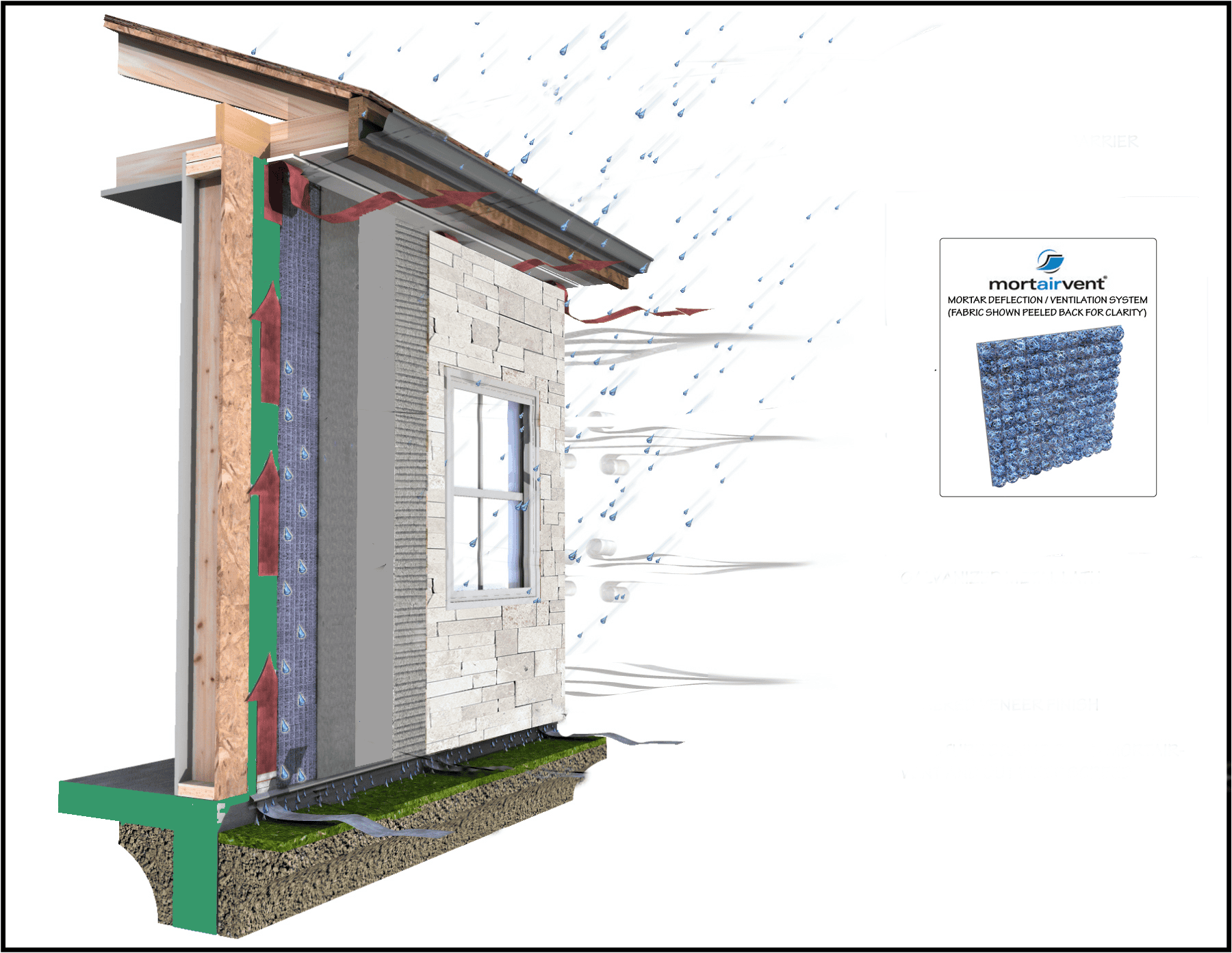
A properly designed rainscreen system solves these problems by allowing airflow and drainage behind exterior finishes—letting walls both drain and dry efficiently.
What Is ASTM E2925?
ASTM E2925 is the Standard Specification for Manufactured Polymeric Drainage and Ventilation Materials Used to Provide a Rainscreen Function.
Simply put, it defines how drainage mats should perform to ensure continuous airflow and water egress behind cladding systems.
What It Covers
The standard establishes performance criteria for:
-
Thickness and compressive strength
-
Drainage capacity
-
Ventilation and airflow
-
Durability and UV/weathering resistance
Why It Matters
States across the U.S. are now referencing ASTM E2925 in building codes. For designers, that means products tested to this standard simplify code compliance while delivering verified performance.
The Science Behind Rainscreen Design
How Rainscreens Work
A rainscreen acts as a pressure-equalized cavity, allowing incidental water that penetrates the cladding to drain out and evaporate. The key functions are:
-
Drainage: Gravity carries water downward and out.
-
Ventilation: Air moves through the cavity to promote drying.
-
Separation: A physical gap prevents capillary action.
When Systems Fail
Without a rainscreen layer, assemblies can trap water. Common failure points include:
-
Blocked or missing weeps
-
Flat walls without drainage mats
-
Incompatible sealants or membranes
-
Poorly detailed flashing and terminations
These failures often result in early facade deterioration—the very risk ASTM E2925 aims to eliminate.
Rainscreen Requirements Across the U.S.
Early Adopters
States such as Washington, Oregon, and Maine have already incorporated rainscreen design into their building codes, citing ASTM E2925 for performance verification.
More States on the Way
Regions like California, Colorado, and New York are exploring similar code amendments—driven by high rainfall, humidity, and the need for energy-efficient, durable building envelopes.
ASTM E2925: Code Compliance Made Clear
ASTM E2925 provides a common testing and verification framework that benefits everyone involved—architects, contractors, inspectors, and building owners alike.
For Specifiers
-
Clear, test-based performance metrics
-
Simplified product selection and submittals
-
Reduced ambiguity in documentation
For Builders and Inspectors
-
Easier inspections and approvals
-
Predictable drainage and ventilation performance
-
Fewer callbacks and warranty issues
High-Performance Solutions Meeting ASTM E2925
When it comes to ASTM E2925-compliant rainscreen products, three solutions stand out for their proven performance and ease of installation:
1️⃣ Mortairvent® Rainscreen
A high-performance drainage mat engineered to enable continuous airflow and drainage behind adhered veneers, stone, and siding.
Benefits:
-
Meets ASTM E2925 standards
-
Ensures wall cavities remain dry
-
Easy to install and compatible with multiple substrates
2️⃣ Veneer Vent®
Designed for ventilation and moisture egress at the base of the wall, Veneer Vent® helps prevent efflorescence and water entrapment—keeping facades pristine and durable.
3️⃣ Mortairvent® Weep Screed
A code-compliant termination detail that ensures water exits the system properly. This component is critical for:
-
Correct drainage paths
-
Long-term durability
-
Simplified inspections
Why Specifying ASTM E2925-Compliant Systems Makes Sense
Simplified Submittals and Approvals
Using systems tested to ASTM E2925 streamlines the documentation process. It also makes inspections smoother since product performance is verified through a recognized national standard.
Reduced Risk and Liability
By ensuring walls can “breathe,” you minimize:
-
Moisture entrapment
-
Mold growth
-
Premature facade failure
The result? Longer service life, fewer repairs, and reduced warranty costs.
Sustainable, Future-Proof Design
Rainscreen assemblies contribute to both energy efficiency and sustainability by maintaining dry, thermally stable wall systems that support healthier indoor environments.
Best Practices for Designing with Rainscreens
To maximize rainscreen performance, follow these design principles:
-
Maintain a continuous drainage plane from top to bottom
-
Include weep openings for ventilation and egress
-
Select compatible materials (membranes, fasteners, and drainage mats)
-
Ensure proper termination and flashing details
-
Avoid sealants that could block airflow
These small but crucial details ensure your assembly meets both ASTM E2925 and real-world performance expectations.
Looking Ahead: The Future of Facade Standards
The integration of ASTM E2925 with energy and sustainability codes marks a new era in building design—one where durability, health, and efficiency go hand in hand.
Digital Design and BIM Integration
Manufacturers are embedding ASTM E2925 data directly into BIM libraries, enabling architects to select compliant products right within their digital workflows.
Sustainability Synergy
As codes evolve, rainscreens will be key to achieving both energy efficiency and resilience, especially in regions facing extreme weather patterns.
FAQs: ASTM E2925 and Rainscreen Design
Q1: What is ASTM E2925?
It’s the ASTM standard defining how drainage mats and rainscreen materials must perform to provide proper ventilation and moisture management behind cladding systems.
Q2: Why is rainscreen design becoming standard?
Because it effectively reduces water damage, mold risk, and premature facade failure—problems that cost billions annually in repairs and claims.
Q3: Which products comply with ASTM E2925?
Mortairvent®, Veneer Vent®, and Mortairvent® Weep Screed are examples of compliant, high-performance rainscreen solutions.
Q4: Are rainscreens required by code?
Yes—several states now require rainscreens, and more are expected to adopt these standards in the near future.
Q5: How does this impact specifiers and contractors?
ASTM E2925 simplifies compliance, improves documentation accuracy, and reduces risk during inspections and installation.
Q6: Where can I read the full standard?
You can access it through ASTM International’s website.
Conclusion: Designing for Durability and Compliance
The shift toward rainscreen design isn’t a passing trend—it’s a necessary evolution in building science. As ASTM E2925 becomes the defining standard for wall drainage and ventilation, professionals who adopt it early will be better prepared for future code mandates and higher performance expectations.
By choosing tested, compliant systems like Mortairvent®, Veneer Vent®, and Mortairvent® Weep Screed, you’re not just meeting code—you’re designing walls built to last.
Learn More
Explore ASTM E2925 directly from ASTM International and learn how compliant products can help you design with confidence.