

Natural Stone Panels vs. Loose Stone vs. Full Bed Stone: What’s the Difference?
Choosing natural stone isn’t just about finding the right color or texture. You also need to choose the right stone format.
Three common options are natural stone panels, loose stone veneer, and full bed stone. All can provide the authentic color, texture and variation of real stone, but they differ significantly in how they’re manufactured or prepared, installed and incorporated into a project.
Here’s the simplest way to understand the difference:
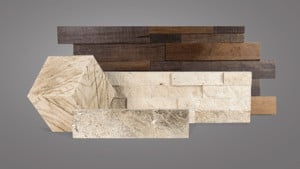
Natural stone panels assemble genuine stone pieces into preformed panels, helping create a dimensional stone surface with a more streamlined installation process.
Loose stone veneer uses individual pieces of genuine natural stone, giving the installer greater control over stone placement, pattern and joint appearance.
Full bed stone is traditional, thicker building stone installed using conventional masonry methods and typically planned as part of the structure from the beginning.
The right choice depends on the architecture, application, desired appearance, installation method, project conditions and budget.
Natural Stone Panels vs. Loose Stone vs. Full Bed Stone at a Glance
| Feature | Natural Stone Panels | Loose Stone Veneer | Full Bed Stone |
|---|---|---|---|
| Material | Genuine natural stone | Genuine natural stone | Genuine natural stone |
| Format | Preassembled panels | Individual pieces | Individual pieces |
| Profile | Thin veneer/panelized | Thin veneer | Traditional thicker masonry |
| Installation approach | Panel-by-panel | Piece-by-piece | Traditional masonry |
| Design flexibility | Consistent, repeatable system | High placement flexibility | Traditional masonry character |
| Corners | Matching corners available on many Realstone products | Corners available with select collections | Masonry corner conditions |
| Common applications | Fireplaces, façades, feature walls, columns and outdoor living | Exteriors, fireplaces, walls, outdoor kitchens and custom masonry looks | New construction and projects designed for traditional masonry |
| Best suited for | Efficient installation with genuine natural stone | Customized stone layouts | Traditional, substantial masonry construction |
All three can produce beautiful natural stone installations. The important question isn’t which format is universally “best.”
It’s which one best fits your project.
What Are Natural Stone Panels?
Natural stone panels are sections of genuine stone assembled into a panelized format rather than installed as individual stones.
Realstone’s natural stone products are made from 100% natural quarried stone, with stone compositions including quartzite, slate, travertine, sandstone, limestone, marble and granite.
Panelization changes the installation format—not the authenticity of the material.
Instead of selecting and placing every stone individually, an installer works with preassembled sections designed to fit together across the wall.
Realstone’s natural stone panel system uses a jointless, dry-stacked appearance, with panels and coordinating corners designed to fit tightly together without grouted joints.
Why Choose Natural Stone Panels?
The primary advantage is straightforward:
You get genuine natural stone in a format designed to make installation more efficient and consistent.
For large walls, fireplaces, façades and other architectural surfaces, panelization can reduce the amount of individual stone placement required.
That can be particularly appealing for builders, contractors and homeowners who want the dimensional character of genuine stone without approaching the installation exactly like traditional loose masonry.
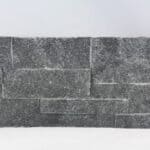
Realstone’s Bristol Black Estate Stone, for example, uses a fingered panel configuration designed to create a seamless appearance while offering faster installation compared with laying loose stone individually.
Where Are Natural Stone Panels Commonly Used?
Depending on the specific product, natural stone panels can be excellent choices for:
- Fireplace surrounds
- Floor-to-ceiling fireplaces
- Home façades
- Entry walls
- Columns
- Interior feature walls
- Outdoor kitchens
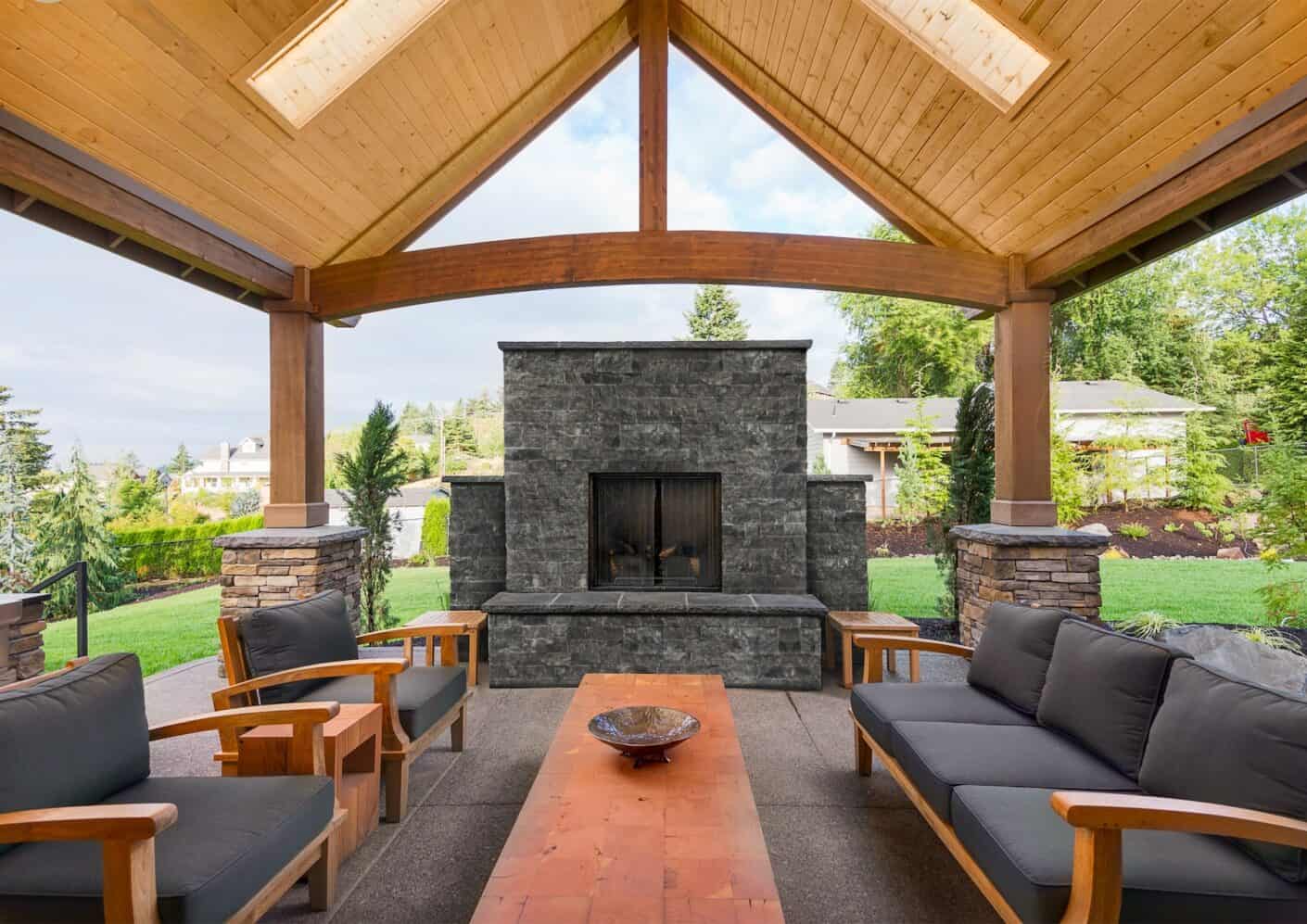
- Outdoor fireplaces
- Commercial feature walls
- Hospitality and retail environments
Because product suitability varies, always verify that the particular stone selected is approved for the intended interior or exterior application.
What Is Loose Stone Veneer?
Loose stone veneer consists of individual pieces of natural stone installed one at a time.
Unlike panelized stone, the installer isn’t working with a predetermined panel arrangement.
That gives the mason greater control over how individual pieces relate to one another.
Stone size, placement, orientation and spacing can all influence the finished appearance, making loose stone particularly attractive when the goal is a handcrafted or traditional masonry aesthetic.
Realstone’s Rixxford natural stone products include loose stone options in natural limestone and granite, with different textures and profiles available for residential and commercial applications.
Why Choose Loose Stone Veneer?
The key advantage of loose stone is design flexibility.
Because each stone is placed individually, an experienced installer can influence the composition as the wall develops.
That makes loose veneer a strong choice for projects where the installation itself is part of the aesthetic.
Depending on the selected stone, loose veneer can create appearances ranging from refined and tailored to rustic and highly organic.
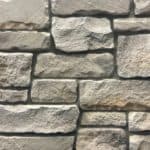
For example, Rixxford Gable Ledgestone combines individual limestone pieces with a split ledgestone face and a blend of brown, grey, tan and black tones.
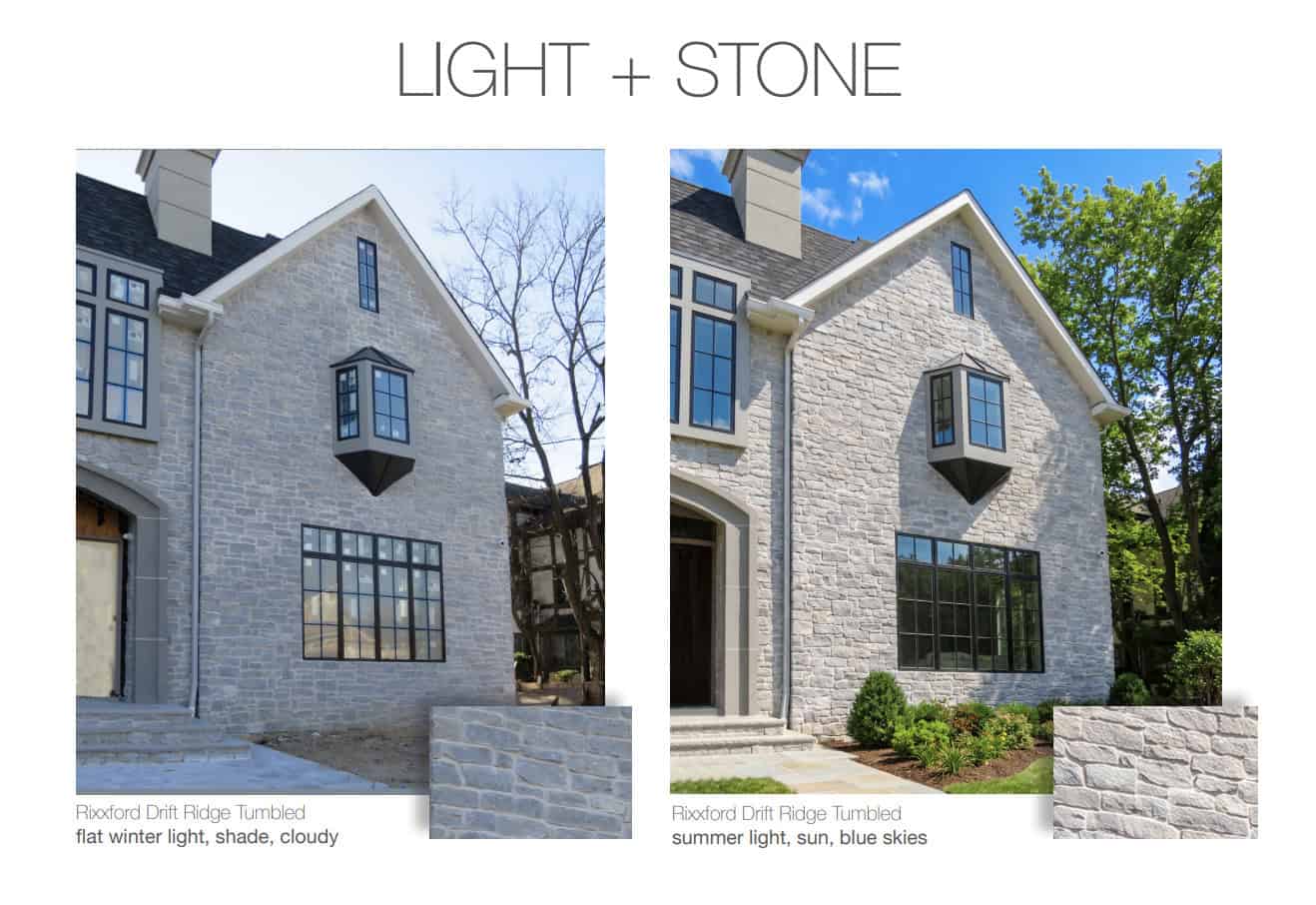
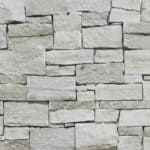
For a different character, Rixxford Drift Ridge Tumbled uses tumbled limestone in shades of light grey, gold and blue-grey.
Both are natural stone.
The difference lies in how the stone’s size, finish, color and installation influence the finished architecture.
Where Is Loose Stone Veneer Commonly Used?
Loose natural stone veneer can work especially well for:
- Home exteriors
- Fireplace surrounds
- Chimneys
- Entry features
- Columns
- Outdoor kitchens
- Outdoor fireplaces
- Landscape walls
- Commercial façades
- Projects requiring a more customized masonry appearance
Realstone’s Rixxford loose stone products also offer corresponding corner options for many applications.
What Is Full Bed Stone?
Full bed stone represents a more traditional approach to natural stone masonry.
Rather than creating a relatively thin decorative veneer over a suitable substrate, full bed stone uses substantially deeper pieces of stone incorporated using traditional masonry construction methods.
The result can provide the depth, mass and character associated with historic stone construction.
Realstone’s Rixxford natural stone collection includes products available in thin veneer, full bed and matching corner options, allowing designers and builders to achieve related aesthetics across different construction requirements.
For example, Rixxford Glacial Ridge Sawn is offered in thin veneer, full bed and corners, giving professionals flexibility when coordinating stone across a project.
Why Choose Full Bed Stone?
Full bed stone makes sense when the project is designed around traditional masonry construction.
It can be particularly appropriate for new construction where the architectural and structural conditions required for thicker masonry have been considered from the beginning.
Rather than trying to recreate the appearance of substantial masonry, you’re actually building with substantial pieces of stone.
The tradeoff is that full bed stone generally requires more structural planning and traditional masonry considerations than thin veneer.
Where Is Full Bed Stone Used?
Full bed natural stone may be appropriate for:
- New residential construction
- Traditional masonry façades
- Architectural foundations and bases
- Landscape and hardscape construction
- Columns and substantial architectural elements
- Commercial architecture
- Projects seeking traditional masonry depth
The exact assembly and structural requirements should always be determined by the project’s architect, engineer, builder and applicable building requirements.
Is Panelized Natural Stone Real Stone?
Yes.
This is an important distinction because “panel” sometimes leads homeowners to assume the product is manufactured or molded.
Realstone natural stone panels are made from 100% natural quarried stone.
The panel refers to the format, not an artificial composition.
Individual pieces of genuine stone are assembled into panels that can then be installed across a suitable wall surface.
This allows homeowners, architects and builders to combine natural variation with a more standardized installation system.
Are Natural Stone Panels the Same as Faux Stone Panels?
No.
Natural stone panels and faux or manufactured stone panels are different material categories.
Realstone natural stone panels are constructed from genuine quarried stone. Faux stone is manufactured to recreate a stone appearance.
Both can have appropriate applications, but they shouldn’t be treated as interchangeable simply because they may both be supplied in installer-friendly formats.
When comparing products, check the material composition, not simply whether the product is called a panel.
Natural Stone Panels vs. Loose Stone: Which Is Easier to Install?
For many wall applications, panelized natural stone can streamline installation because multiple stone pieces are already assembled into sections.
Loose stone requires each piece to be selected and placed individually, giving the installer more control but generally involving more individual layout decisions.
Realstone’s panel system uses tightly fitting panels and corners to produce a jointless, dry-stacked appearance. Installation calls for an appropriate substrate, polymer-modified mortar and full coverage, along with applicable building codes and installation best practices.
Homeowners and professionals can review Realstone’s natural stone installation videos and guides before planning a project.
Installation difficulty ultimately depends on the product, substrate, wall conditions, cuts, corners, installer experience and complexity of the design.
Natural Stone Panels vs. Loose Stone: Which Looks Better?
Neither format inherently looks better.
They create different kinds of natural stone installations.
Choose panels when you want a more repeatable system that still provides genuine natural stone texture and variation.
Choose loose stone when individual stone placement and a more handcrafted masonry composition are important to the design.
The architectural style should drive the decision.
A contemporary linear fireplace, for example, may pair beautifully with a precisely arranged ledgestone panel.
A rustic home exterior may benefit from the individual variation and placement possible with loose stone.
The objective shouldn’t be to select the format with the most dramatic sample.
It should be to choose the format that best supports the architecture.
Thin Stone Veneer vs. Full Bed Stone: What’s the Main Difference?
The fundamental difference is depth and construction method.
Thin stone veneer is designed to create an authentic natural stone surface without requiring the same wall depth associated with traditional full bed masonry.
Full bed stone uses thicker individual pieces and is incorporated through conventional masonry construction.
That difference affects several aspects of a project:
Wall design: Full bed masonry needs to be considered as part of the wall assembly.
Weight: Thicker stone adds substantially more material than thin veneer.
Foundation and support: Full bed masonry may require structural support that isn’t necessary for a thin veneer assembly.
Installation: Thin veneer is adhered to a suitable prepared substrate, while full bed stone follows traditional masonry construction methods.
Appearance: Both can provide authentic natural stone character because both use genuine stone. Full bed construction provides the physical depth of traditional masonry.
For renovations in particular, thin veneer can provide opportunities to incorporate natural stone where a full-depth masonry assembly wasn’t originally planned.
Which Natural Stone Format Is Best for a Fireplace?
For many fireplace designs, natural stone panels or loose stone veneer are practical choices, depending on the desired appearance.
Panelized stone works particularly well when the goal is an efficient installation with a coordinated, dry-stacked appearance.
Loose stone works well when the fireplace is intended to look more traditionally mason-built or when greater control over individual stone placement is desired.
Full bed stone may be appropriate when a new fireplace or chimney is being constructed as part of a traditional masonry assembly.
The stone format should always be selected alongside the fireplace construction, clearances, substrate and applicable requirements—not afterward.
Explore Realstone’s fireplace and stone project inspiration to compare different finished looks.
Which Stone Format Is Best for a Home Exterior?
All three formats can play a role in exterior architecture, but the building assembly matters.
Natural stone panels can be a strong option for exterior cladding when the selected product is rated for exterior use and the wall assembly is properly designed.
Loose stone veneer works well for homeowners and designers seeking more customized masonry patterns and individual stone placement.
Full bed stone is most appropriate when substantial traditional masonry has been incorporated into the building design.
For renovations or projects where traditional full-depth masonry wasn’t planned, thin natural stone veneer can often provide considerably greater design flexibility.
Always verify the usage specifications for the exact product being considered. Some natural stone products have application restrictions.
How Do You Choose Between Natural Stone Panels, Loose Stone and Full Bed Stone?
Start with the project rather than the stone sample.
Ask these questions:
1. Is this new construction or a renovation?
Existing construction may make a thin veneer solution more practical, while new construction can provide greater freedom to plan for traditional masonry.
2. What appearance do you want?
Panels can provide a consistent dry-stacked composition. Loose stone provides more freedom over individual placement. Full bed stone delivers genuine traditional masonry depth.
3. Where will the stone be installed?
A fireplace, exterior façade, landscape wall and interior feature wall can have very different requirements.
4. How important is installation efficiency?
Panelized systems can reduce individual stone placement compared with loose veneer.
5. How much customization do you want?
Loose stone gives the installer greater control over the finished arrangement.
6. What does the wall assembly support?
The appropriate stone format needs to work with the substrate, structure and construction method.
7. Are matching corners and accessories needed?
Think beyond the flat wall. Columns, wall returns, fireplace sides, caps, sills and outside corners can strongly influence the finished appearance.
Matching Corners Can Influence the Decision
Corners are easy to overlook when viewing a flat sample.
They’re much harder to overlook after installation.
A fireplace, column or exterior return exposes multiple faces of the stone installation. Coordinating corner pieces can help maintain the appearance of depth as the material turns the corner.
Realstone offers matching corner products across many of its natural stone panel collections, while Rixxford loose stone selections are also available with corner options.
This is worth considering before finalizing the stone selection.
For projects involving multiple walls or corners, Realstone’s stone project calculator can help estimate flat material, openings and corner requirements.
So, Which Natural Stone Should You Choose?
There isn’t one answer for every project.
Choose natural stone panels when you want genuine quarried stone in a panelized system that can streamline installation while creating a dimensional stone surface.
Choose loose stone veneer when you want genuine natural stone with greater freedom over individual stone placement and the finished masonry pattern.
Choose full bed stone when your project is designed for traditional masonry construction and the physical depth of substantial natural stone is part of the architectural intent.
All three approaches can deliver something manufactured materials can’t duplicate exactly: the inherent color, texture, mineral variation and individuality of genuine stone.
The key is choosing the right form of natural stone for the architecture you’re creating.
Explore Realstone natural stone products to compare panelized and loose stone options, or browse Realstone project inspiration to see how different stone formats can transform fireplaces, façades, outdoor living spaces and interior walls.
Frequently Asked Questions About Natural Stone Formats
What Is the Difference Between Stone Panels and Loose Stone?
Natural stone panels combine multiple pieces of genuine stone into preassembled sections, while loose stone veneer consists of individual pieces installed one at a time. Panels can streamline installation, while loose stone gives the installer greater control over the finished masonry pattern.
Is Natural Stone Veneer Actually Real Stone?
Yes, when you’re purchasing genuine natural stone veneer. Realstone’s natural stone panel products are made from 100% natural quarried stone. Natural stone veneer should not be confused with faux or manufactured stone, which is produced rather than quarried.
What Is the Difference Between Thin Stone Veneer and Full Bed Stone?
Thin stone veneer uses thinner pieces of natural stone applied to a properly prepared wall assembly. Full bed stone uses substantially thicker pieces installed through traditional masonry construction. Both can use genuine natural stone, but their depth, weight and installation methods differ.
Is Loose Stone More Natural Than Stone Panels?
No. Format doesn’t determine whether stone is natural. Realstone’s panelized natural stone and its natural loose stone products both use genuine stone. The primary difference is how the material is prepared and installed.
Can Natural Stone Panels Be Used Outside?
Many can, but not every product is suitable for every exterior application. Realstone states that most of its products can be used indoors and outdoors with proper installation, while certain products have restrictions. Always check the specifications for the exact stone being considered.
Can You Use Natural Stone Panels on a Fireplace?
Many natural stone panel products can be used for fireplace applications when installed in accordance with the product specifications, fireplace requirements and applicable codes. Stone panels are particularly useful for creating dimensional floor-to-ceiling fireplace walls and surrounds.
Are Matching Corners Available for Natural Stone Veneer?
Yes. Many Realstone panel collections have matching corner components, and corner options are also available with selected Rixxford loose stone products. Coordinating corners can help create a more convincing dimensional appearance around fireplaces, columns and wall returns.
Where Can I Compare Natural Stone Options?
Browse Realstone’s natural stone products to compare stone types, colors, formats and applications. For technical planning, installation information and professional resources, visit the Realstone project resources.
I intentionally structured this differently from a conventional inspiration blog. The direct answer immediately after the H1, comparison table, definition-based H2s, “which should I choose?” section, and concise FAQs give Google and AI systems clearly extractable passages, while the product links create strong semantic connections between informational queries and Realstone’s commercial pages.