

14 Stone Veneer Fireplace Design Ideas for a Stunning Focal Point
A stone veneer fireplace can add warmth, texture, and architectural character to almost any room. With options ranging from rugged ledgestone to smooth natural stone tile, homeowners can create fireplace surrounds that complement modern, rustic, traditional, transitional, and contemporary interiors.
What are the best stone veneer fireplace ideas? Popular options include floor-to-ceiling stone walls, reclaimed wood mantels, arched surrounds, built-in storage, herringbone patterns, multi-sided fireplaces, and outdoor gathering spaces. The right design depends on the room’s size, ceiling height, color palette, firebox style, and overall architecture.
This guide explores 14 natural and faux stone fireplace ideas, along with practical considerations for choosing a profile, color, layout, hearth, and mantel.
Table of Contents
- What Is a Stone Veneer Fireplace?
- Why Use Stone Veneer Around a Fireplace?
- How to Choose a Stone Fireplace Design
- Multi-Functional Fireplace With Storage
- Arched Stone Fireplace Surround
- Reclaimed Wood Mantel With Stone Veneer
- Floor-to-Ceiling Stone Fireplace
- Clean White Stone Fireplace
- TV Above a Stone Fireplace
- Fireplace Banding
- Multi-Tone Herringbone Fireplace
- Bathroom Fireplace
- Multi-Sided Fireplace
- Outdoor Stone Fireplace
- Natural Stone Fireplace Accessories
- Faux Stone Fireplace
- Stone Tile Fireplace
- How to Choose the Right Stone Veneer
- Frequently Asked Questions
What Is a Stone Veneer Fireplace?
A stone veneer fireplace is a firebox or fireplace wall covered with a relatively thin layer of natural or manufactured stone. The veneer creates the appearance and texture of full-depth masonry without requiring the same volume of stone.
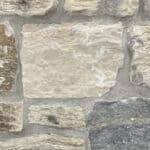
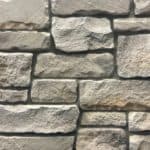
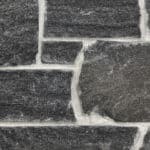
Natural stone veneer is cut from quarried stone and retains authentic variations in texture, shape, and color. Realstone specializes in natural stone veneer panels, stone veneer that is assembled and adhered into one square foot panels for easy and fast installation.
Both options can be used to create:
- Compact fireplace surrounds
- Floor-to-ceiling fireplace walls
- Chimney breasts
- Hearths and mantel ledges
- Indoor and outdoor feature walls
- Multi-sided fireplace enclosures
The selected product, substrate, mortar system, clearances, and installation method must be appropriate for the fireplace and approved application.
Why Use Stone Veneer Around a Fireplace?
Stone veneer adds natural texture and visual depth while giving homeowners flexibility in color, scale, pattern, and style. It can make a simple firebox feel like an intentional architectural feature.
Natural Texture and Character
Every stone profile creates a different effect. Rough ledgestone gives a fireplace dimension and shadow, while smooth stone tile produces a more streamlined appearance.
Natural color variations can also connect a fireplace to flooring, cabinetry, exposed beams, furniture, or outdoor landscaping.
Options for Nearly Every Home Style
Stone is not limited to rustic cabins or traditional homes. Light-toned panels, narrow stacked profiles, geometric tiles, and clean floor-to-ceiling installations can all suit modern interiors.
Irregular stone, substantial hearths, and reclaimed wood mantels can create a warmer farmhouse or lodge-inspired look.
Flexible Design Possibilities
Stone veneer can cover a small area immediately around the firebox or extend across an entire wall. It can also be paired with built-ins, televisions, shelves, mantels, and matching natural stone accessories.
That flexibility makes it easier to tailor the fireplace to the room rather than forcing the room to accommodate one standard design.
How Do You Choose a Stone Fireplace Design?
Choose a stone fireplace design by considering the size of the wall, ceiling height, room style, stone scale, color palette, mantel placement, and firebox shape. The design should feel proportional to both the fireplace and the surrounding architecture.
Before selecting a stone profile, consider these questions:
- Is the room modern, rustic, traditional, or transitional?
- Will the stone stop at the mantel or extend to the ceiling?
- Does the room need a subtle backdrop or a bold focal point?
- Will the fireplace include built-in storage?
- Is a television being mounted above the firebox?
- Does the stone need to coordinate with flooring or cabinetry?
- Will the project require a hearth, sill, corner pieces, or trim?
- Is the fireplace indoors, outdoors, or exposed to moisture?
Viewing physical samples in the room can help reveal how the stone will look under both natural and artificial light.
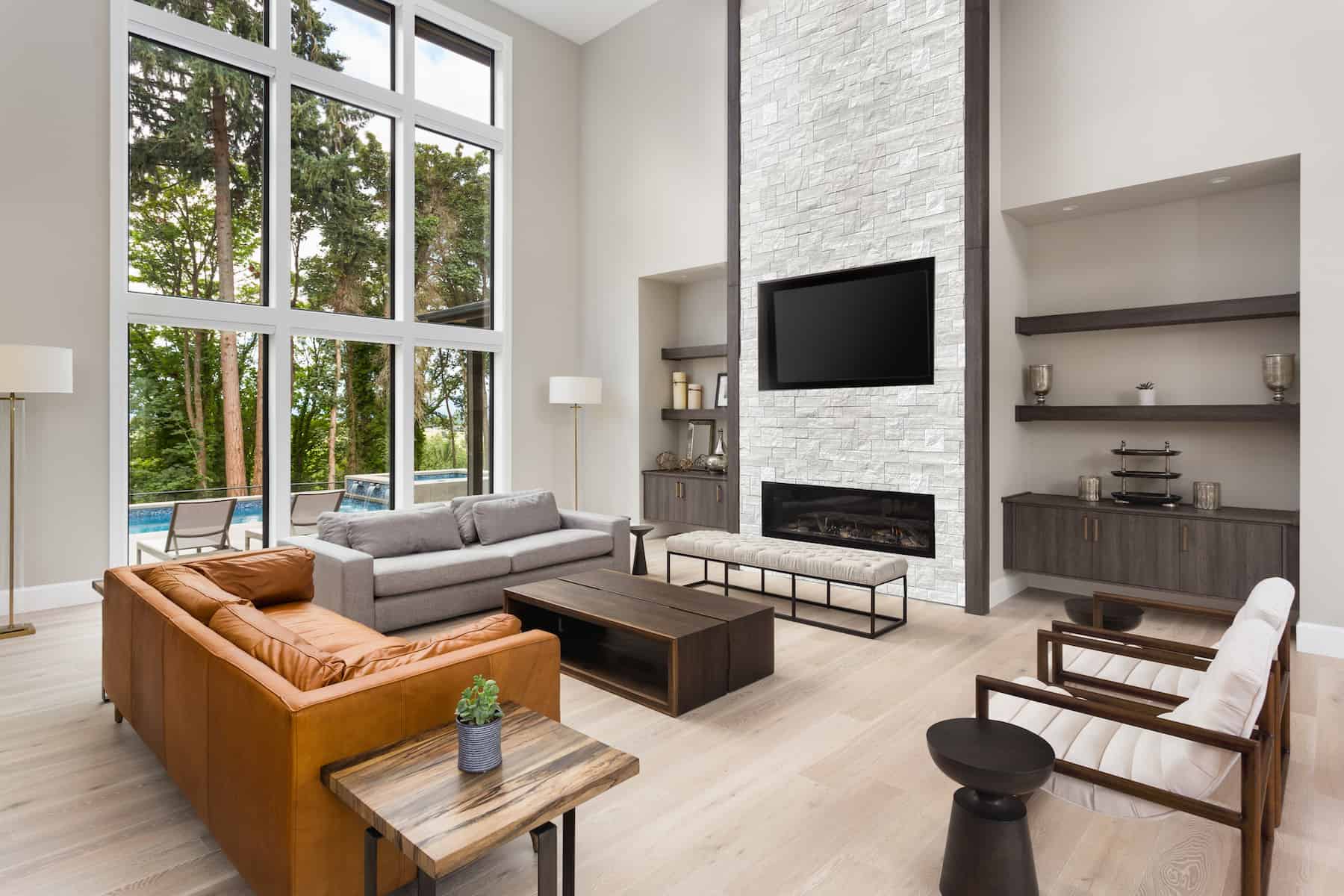 1. Multi-Functional Stone Fireplace With Storage
A stone fireplace does not need to be the only functional element on its wall. Built-in cabinets, bookshelves, display niches, and firewood storage can turn the entire area into a practical feature.
Using the same stone around the firebox and between the surrounding cabinetry creates visual continuity. It can make several separate elements appear to be part of one cohesive installation.
For a balanced design, coordinate the stone’s undertones with the cabinet finish. Warm beige or rust-colored stone works naturally with wood cabinetry, while gray or white stone can complement painted built-ins.
Suggested image alt text: Stone veneer fireplace with built-in storage cabinets
Internal link opportunity: Link “stone veneer panels” to the relevant product collection or category page.
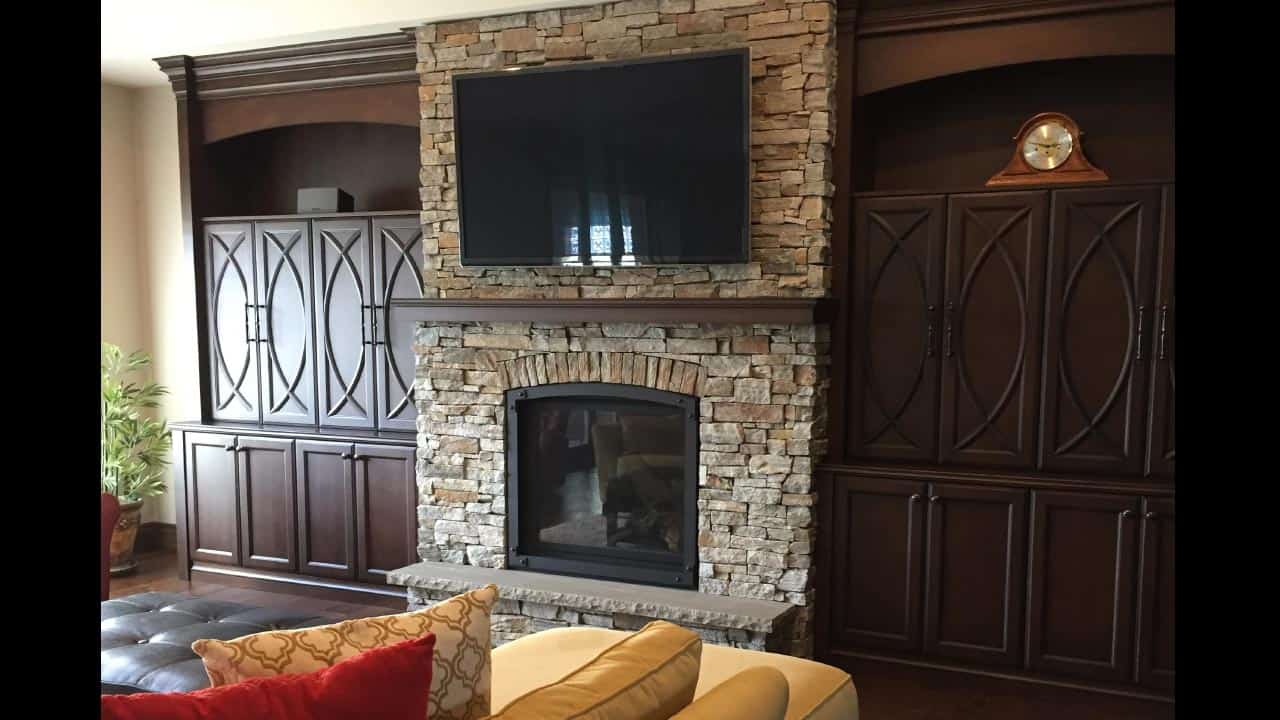
2. Arched Stone Fireplace Surround
An arched firebox has a softer and more formal appearance than a square or rectangular opening. Stone can emphasize that shape and make the curve a defining architectural feature.
Installers may change the direction or orientation of the surrounding pieces to follow the top of the arch. This creates a clear visual border and draws attention to the craftsmanship around the opening.
Arched surrounds pair especially well with irregular natural stone, estate-style profiles, and substantial hearths. They are a strong choice for traditional, Mediterranean, European-inspired, and rustic interiors.
Suggested image alt text: Arched fireplace framed with natural stone veneer
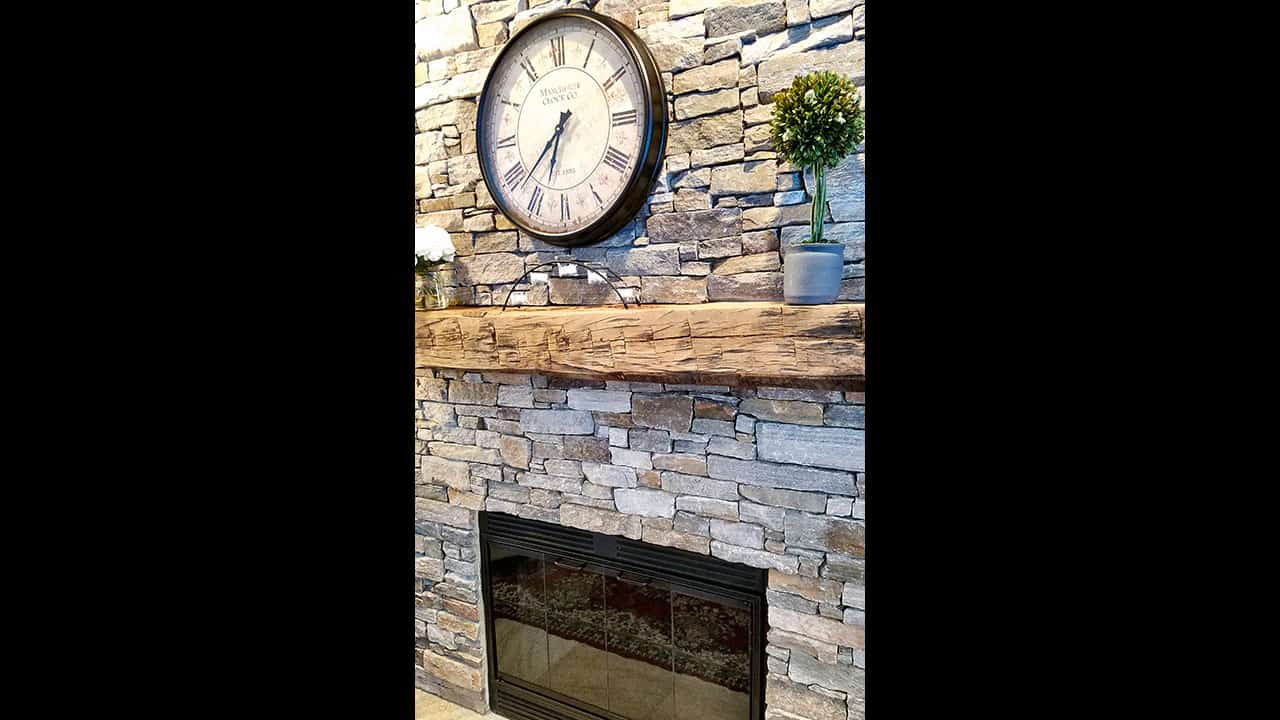
3. Reclaimed Wood Mantel With a Stone Veneer Fireplace
Stone and reclaimed wood work well together because each material introduces natural variation. The stone contributes depth and texture, while the wood adds warmth and history.
A thick reclaimed beam can soften the appearance of a large stone wall. It also creates a visual break between the firebox and the upper portion of a floor-to-ceiling installation.
How Do You Match a Wood Mantel to Stone?
Match a wood mantel to stone by selecting a finish that either complements or deliberately contrasts with the stone’s dominant undertone. Warm wood pairs naturally with beige, brown, cream, and rust-colored stone, while dark walnut can create contrast against white or light gray veneer.
The mantel should also be proportional to the fireplace. A wide stone wall usually benefits from a substantial beam, while a compact surround may look better with a slimmer floating mantel.
Suggested image alt text: Natural stone fireplace with a reclaimed wood mantel
Internal link opportunity: Link “natural stone fireplace” to a gallery of completed fireplace installations.
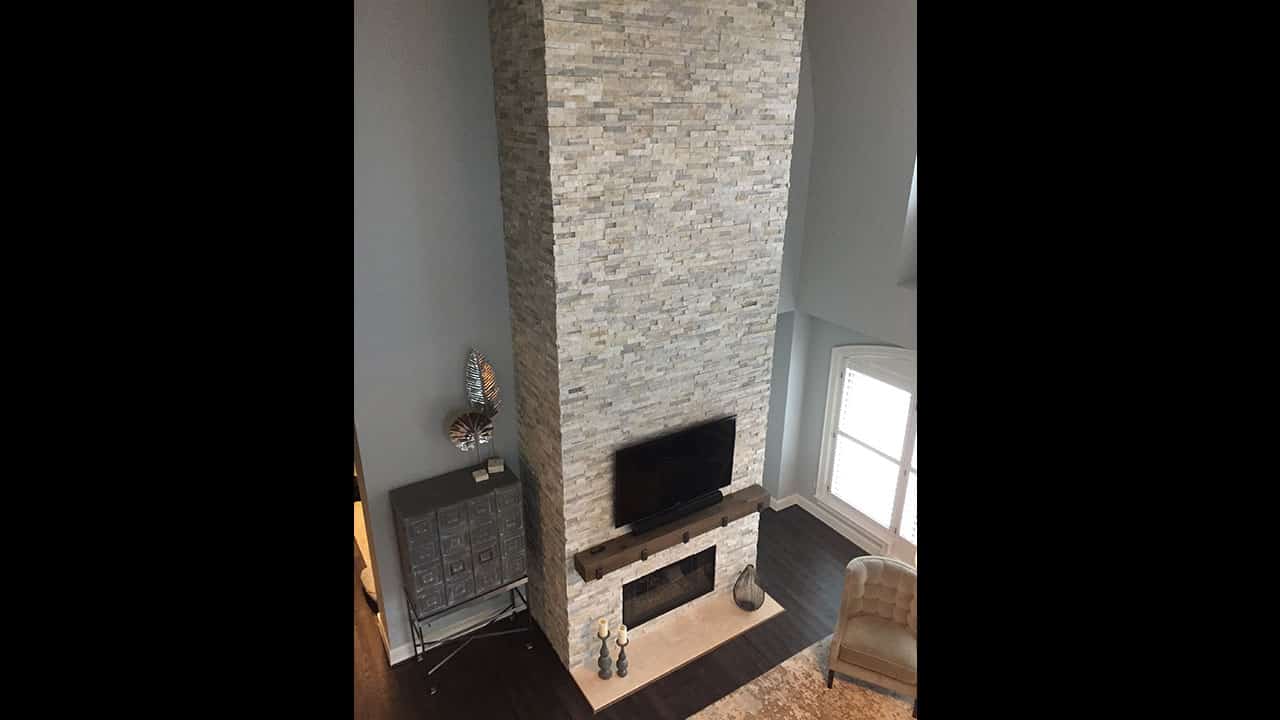
4. Floor-to-Ceiling Stone Fireplace
A floor-to-ceiling stone fireplace turns the entire wall into an architectural focal point. It is especially effective in great rooms with high, vaulted, or sloped ceilings.
The vertical installation draws the eye upward and emphasizes the height of the room. It can also give a standard firebox more presence by visually connecting it to the ceiling.
Large walls need careful material selection. Very small or highly varied pieces may appear busy across a broad surface, while larger panels or longer horizontal profiles can create a calmer composition.
Should Stone Veneer Extend to the Ceiling?
Stone veneer should extend to the ceiling when the goal is to emphasize height, create a dramatic feature wall, or visually anchor a large room. A partial-height surround may be more appropriate in a compact space or when other architectural features need equal attention.
Suggested image alt text: Floor-to-ceiling stone veneer fireplace beneath a vaulted ceiling
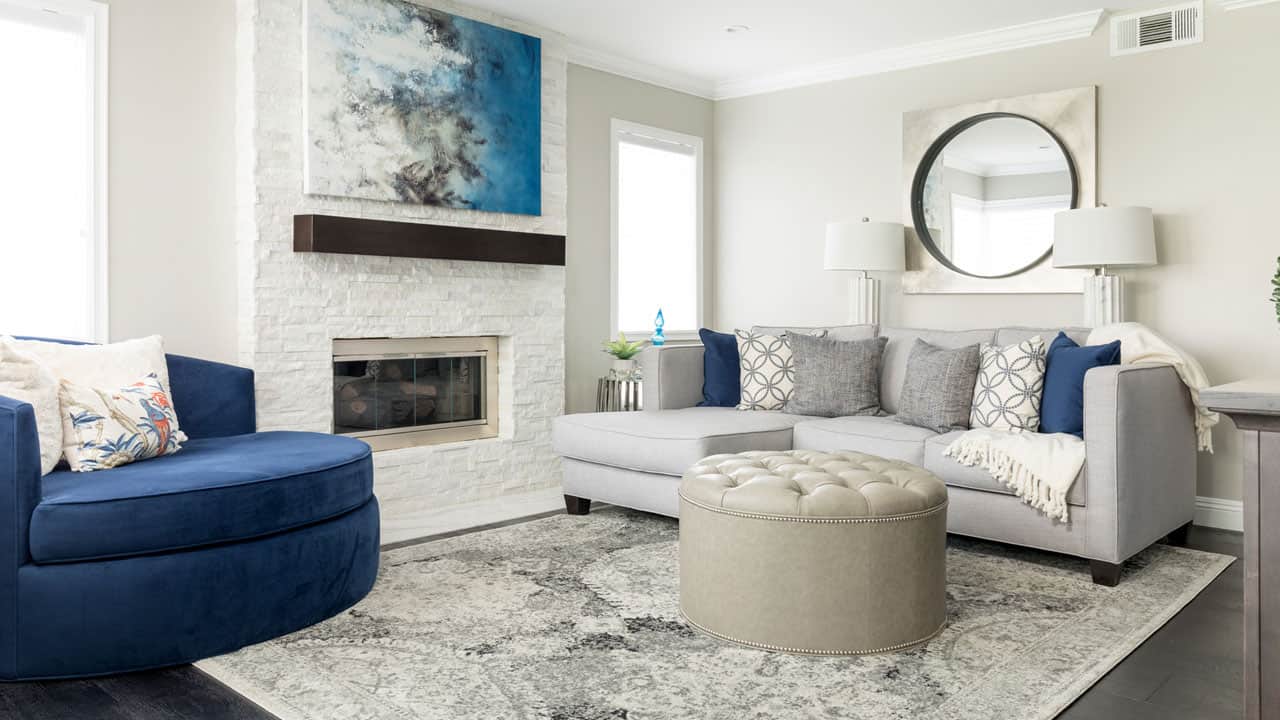
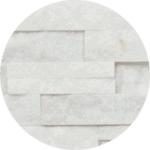
5. Clean White Stone Fireplace
White and light-colored stone can brighten a room while maintaining the texture and variation of a natural material. It is an effective choice when darker stone would feel too visually heavy.
A white stone fireplace also provides a flexible background for changing furniture, artwork, and accent colors. It can support monochromatic rooms as well as interiors with bold decorative elements.
Light stone works particularly well in:
- Coastal interiors
- Minimalist living rooms
- Modern farmhouses
- Transitional spaces
- Bright open-concept homes
- Rooms with limited natural light
For added dimension, combine white stone with a dark firebox, natural wood mantel, or contrasting metal accents.
Suggested image alt text: Clean white stone veneer fireplace in a bright living room
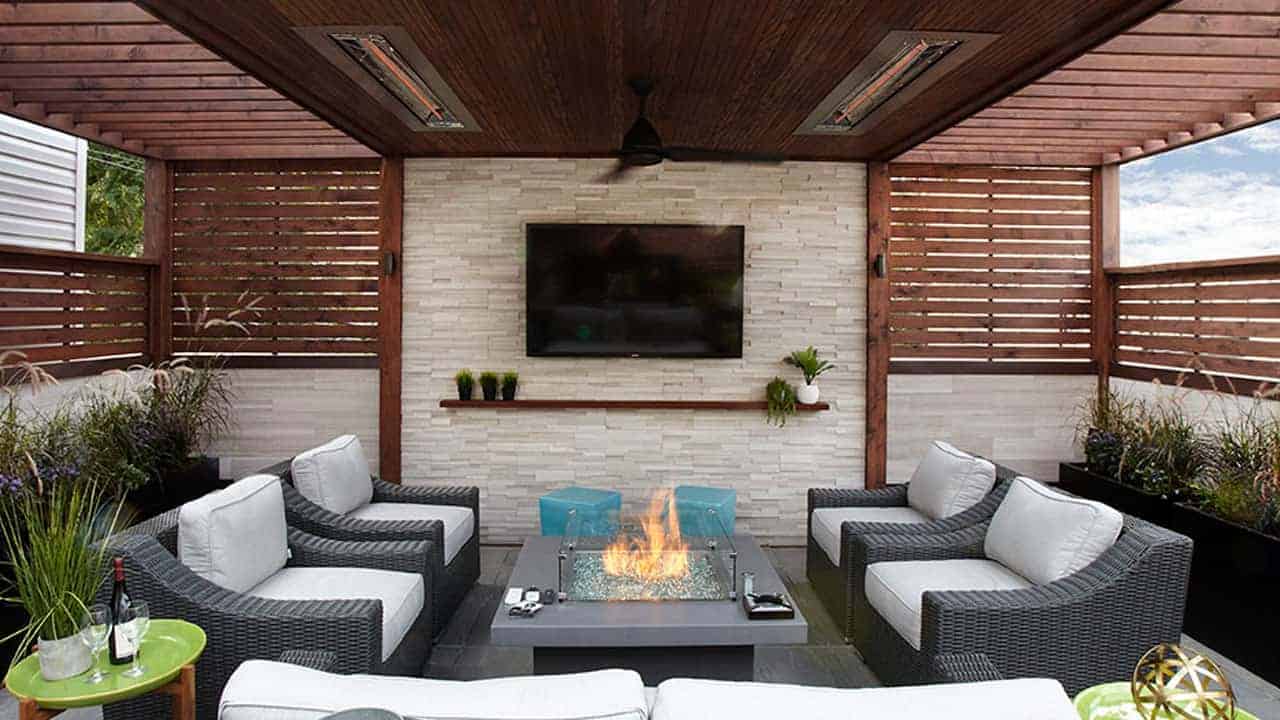
6. Stone Fireplace With a TV Above It
Mounting a television above a fireplace consolidates two major focal points into one area. This can simplify furniture placement and prevent the room from feeling visually divided.
However, the design must account for viewing comfort, heat exposure, mounting support, cable routing, and the fireplace manufacturer’s requirements.
Can You Mount a TV Above a Stone Fireplace?
A television can often be mounted above a stone fireplace when the wall has proper structural support and the installation follows the fireplace and television manufacturers’ clearance and temperature requirements. A mantel may help create visual separation, but it should not replace proper planning.
Recessed wiring, conduit, and component storage should be planned before the stone is installed. Retrofitting cables through a finished stone wall can be difficult.
Suggested image alt text: Television mounted above a contemporary stone veneer fireplace
Internal link opportunity: Link “fireplace mantel” to a page featuring stone sills, mantel shelves, or compatible accessories.
7. Fireplace Banding
Fireplace banding projects the surround forward from the main wall and wraps the stone around multiple sides. This creates a more dimensional appearance than a flat application.
The projecting edges produce shadow lines that highlight the stone’s texture. Banding can also make a relatively narrow fireplace feel more substantial.
This treatment is effective with stacked stone, chiseled panels, and other profiles that look attractive from several angles. Coordinating corner pieces can help create a finished transition around the projection.
What Is Banding Around a Fireplace?
Fireplace banding is a raised surround that extends forward and wraps around the sides of the fireplace. It creates depth, defines the firebox, and gives the stone installation a three-dimensional appearance.
Suggested image alt text: Three-sided stone veneer banding around a fireplace
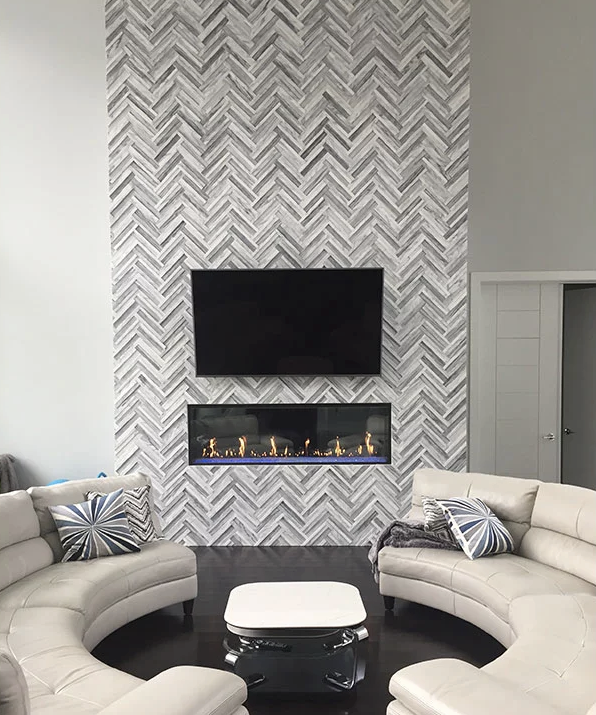
8. Modern Multi-Tone Herringbone Fireplace
Stone does not need to be installed in a standard horizontal pattern. Rectangular stone tiles can be arranged in a herringbone layout to create movement and geometric interest.
A combination of gray, cream, taupe, or charcoal tones adds depth without requiring a bright accent color. The pattern itself becomes the decorative feature.
Herringbone works best when the tile dimensions and layout suit the scale of the surround. Careful alignment is essential because uneven joints become more noticeable in geometric patterns.
Is Herringbone Stone Suitable for a Modern Fireplace?
Yes. A herringbone stone layout can give a fireplace a modern or transitional appearance by combining natural variation with a clean geometric pattern. Neutral, multi-tone tiles provide contrast without overwhelming the room.
Suggested image alt text: Multi-tone natural stone tile fireplace in a herringbone pattern
Internal link opportunity: Link “natural stone tile” to the corresponding tile collection page.
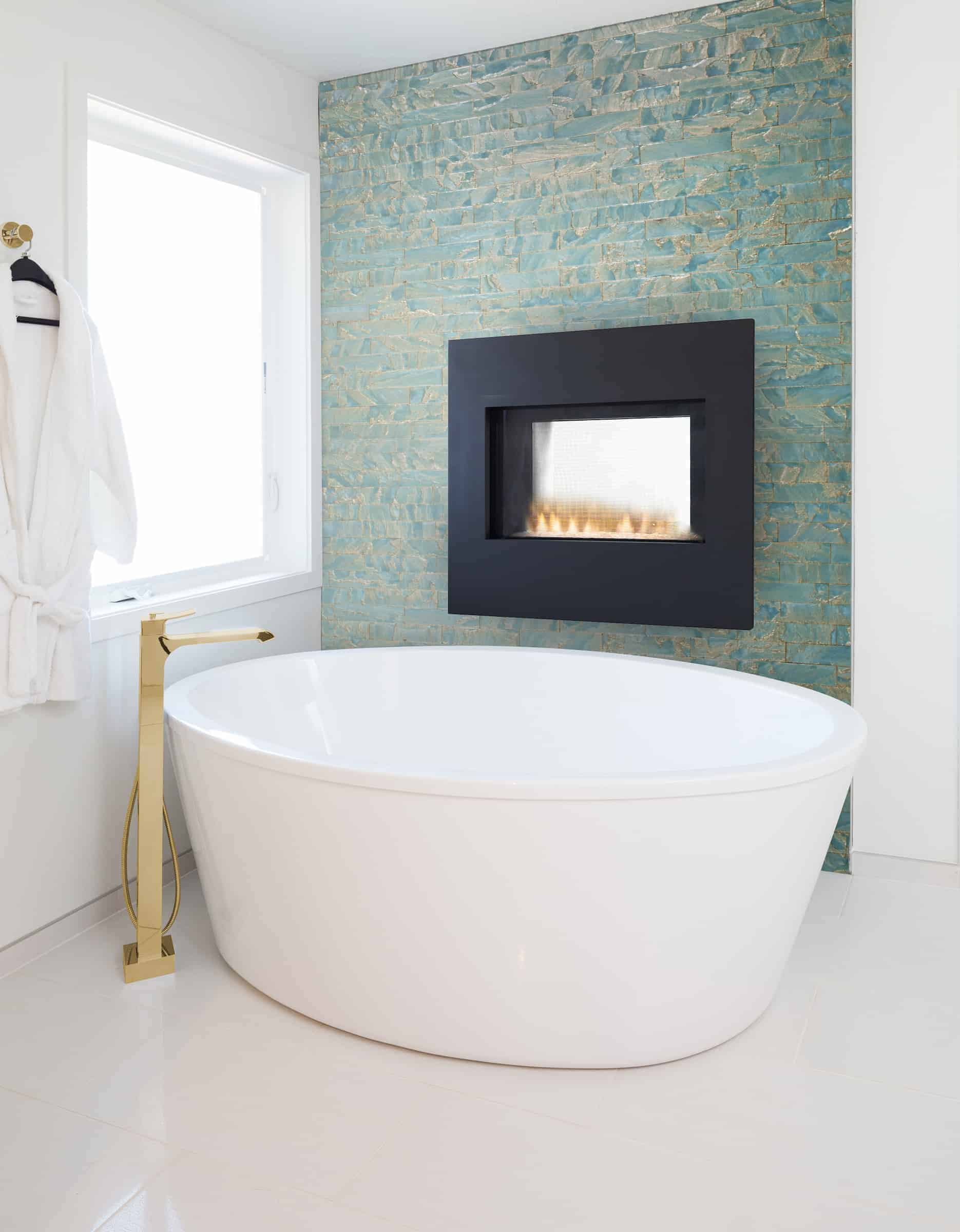
9. Bathroom Fireplace
A bathroom fireplace can create a warm, spa-like atmosphere, particularly when positioned near a soaking tub or lounge area. Stone reinforces that feeling by introducing an organic surface associated with natural retreats.
Warm neutral stone can soften polished bathroom finishes, while gray or white stone can support a cleaner contemporary design.
Moisture, ventilation, clearances, fuel type, and local requirements should be considered during planning. The selected veneer and installation system must also be suitable for the specific environment.
Can You Put a Stone Fireplace in a Bathroom?
A stone fireplace may be installed in a bathroom when the fireplace model, ventilation, wall assembly, stone product, and installation comply with manufacturer instructions and applicable building requirements. Moisture exposure and room layout should be evaluated before construction begins.
Suggested image alt text: Stone veneer fireplace opposite a bathroom soaking tub
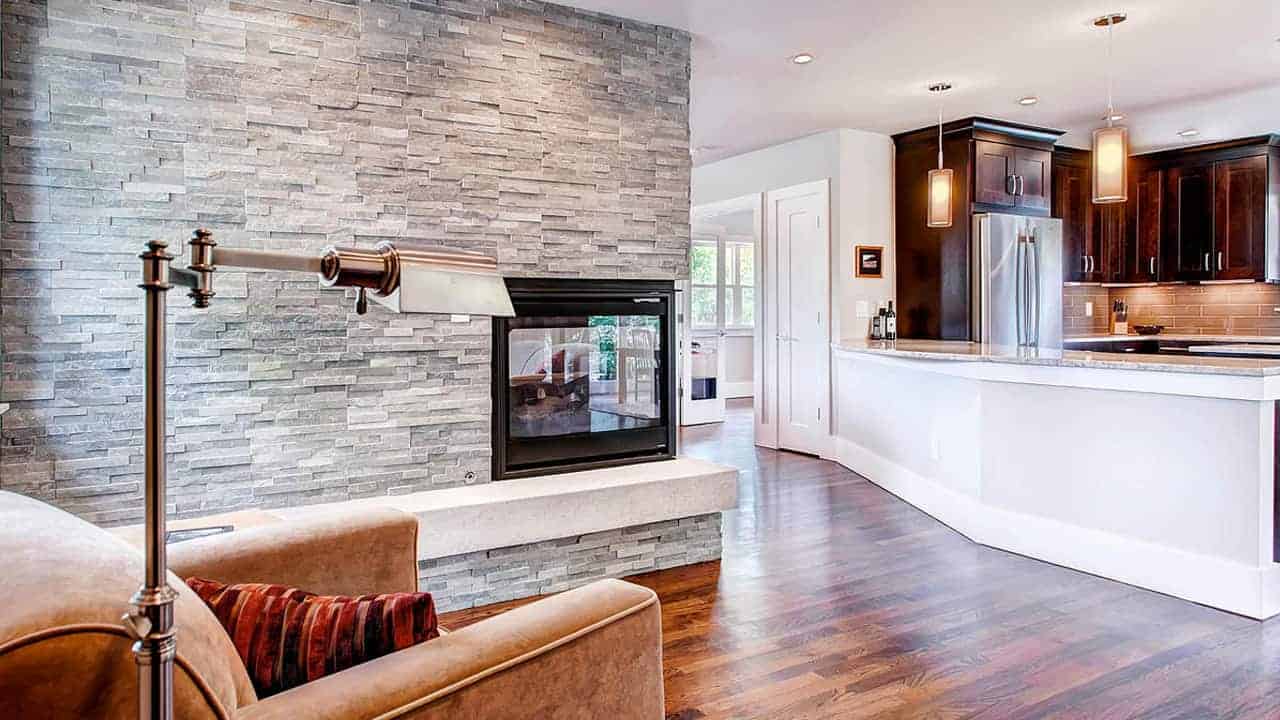
10. Multi-Sided Stone Fireplace
A multi-sided fireplace allows the fire to be viewed from two or more areas. It can divide an open floor plan without completely closing the space.
Two-sided fireplaces are often placed between a living room and dining room. Three-sided or walk-around designs can become central features visible from several seating areas.
Wrapping the structure in stone gives it enough visual weight to anchor the room. Narrow stacked panels can emphasize horizontal lines, while larger stone pieces create a more monolithic appearance.
What Is the Benefit of a Multi-Sided Fireplace?
A multi-sided fireplace provides views of the fire from more than one room or angle. It can define separate zones, preserve an open layout, and create a shared focal point across a large interior.
Suggested image alt text: Multi-sided fireplace wrapped in textured natural stone veneer
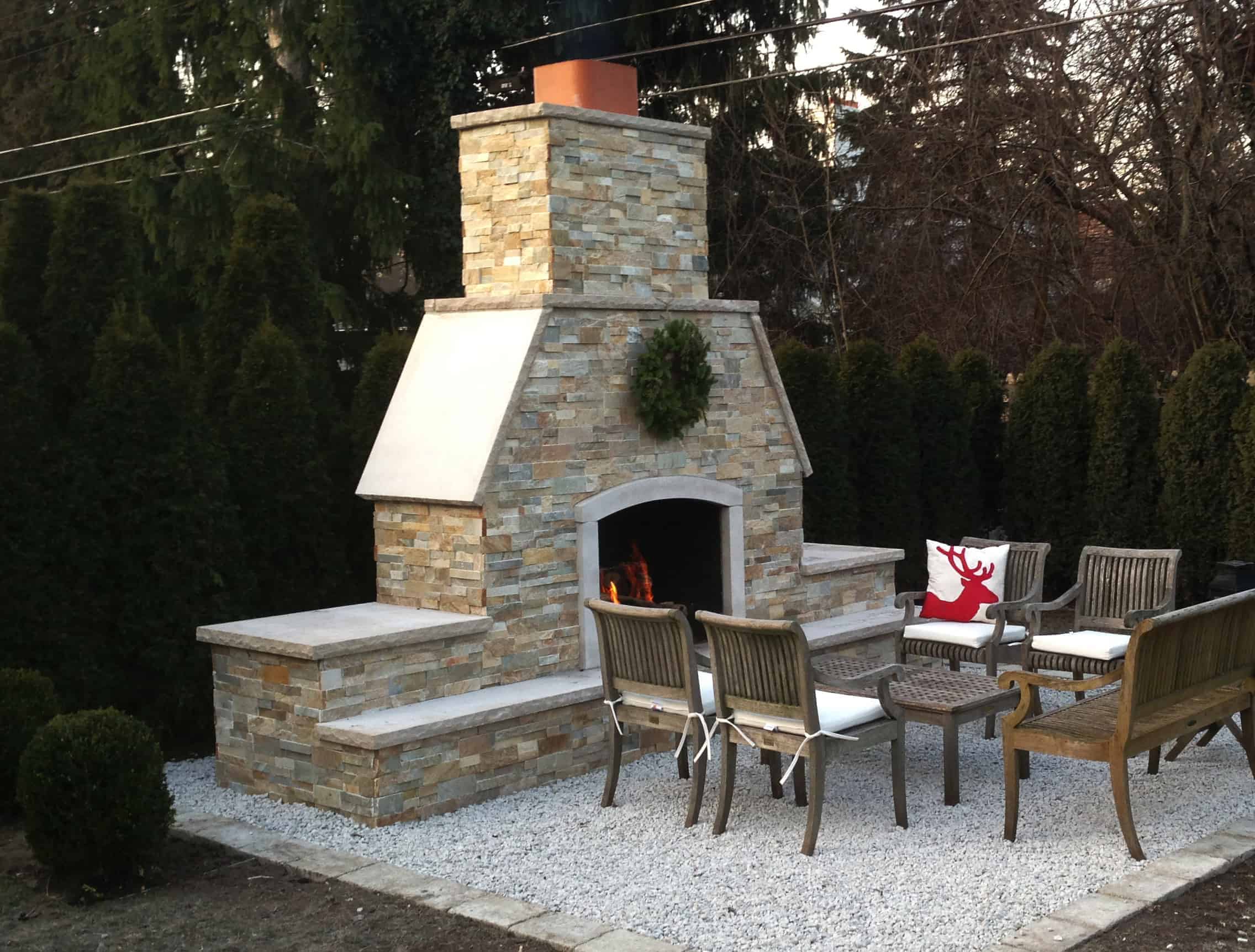
11. Outdoor Stone Fireplace
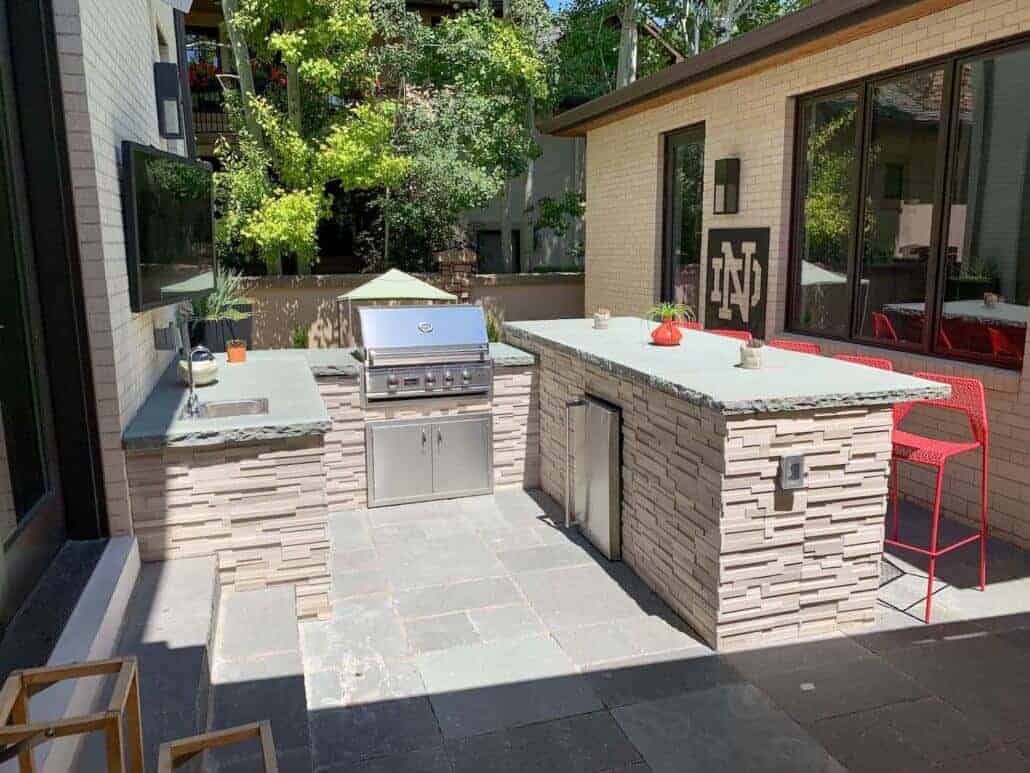
An outdoor stone fireplace creates a gathering area for patios, covered porches, pools, and outdoor kitchens. It can help an exterior living space feel more permanent and connected to the home.
Natural-looking stone blends easily with landscaping, retaining walls, walkways, and other hardscape materials. It also reflects light and shadow, making the fireplace visually appealing after sunset.
The design may include:
- Built-in seating
- A raised stone hearth
- Firewood storage
- A television or entertainment area
- An outdoor kitchen
- A pergola or covered patio
- A multi-sided firebox
Products used outdoors must be suitable for exterior exposure and the local climate. Proper installation is especially important in regions affected by moisture and freeze-thaw cycles.
Can Stone Veneer Be Used on an Outdoor Fireplace?
Stone veneer can be used on an outdoor fireplace when the product and complete installation system are approved for exterior use. The substrate, mortar, flashing, drainage details, and weather exposure must all be considered.
Suggested image alt text: Outdoor stone veneer fireplace on a landscaped patio
Internal link opportunity: Link “outdoor stone veneer” to an exterior applications page or outdoor project gallery.
12. Natural Stone Fireplace Accessories
Matching stone accessories can give a fireplace surround a more complete and intentional appearance. Hearths, sills, trim, and corner pieces also help manage transitions between materials.
Stone Hearths
A hearth forms the horizontal area at the base of the fireplace. Depending on the design, it may sit flush with the floor or project outward to create a raised ledge.
Limestone and other natural stone hearths are available with finishes ranging from smooth and honed to textured and chiseled.
Stone Sills and Mantel Shelves
A stone sill can create a narrow ledge above the firebox or provide a transition between the stone veneer and another wall finish. It offers a cleaner, slimmer alternative to a heavy wood mantel.
Corners and Trim Pieces
Coordinating corner pieces help veneer wrap naturally around projections, columns, and fireplace banding. They can reduce visible cut edges and make the surround appear more substantial.
Suggested image alt text: Natural stone fireplace hearth with a matching limestone sill
Internal link opportunity: Link “stone hearths and sills” to the fireplace accessory category.
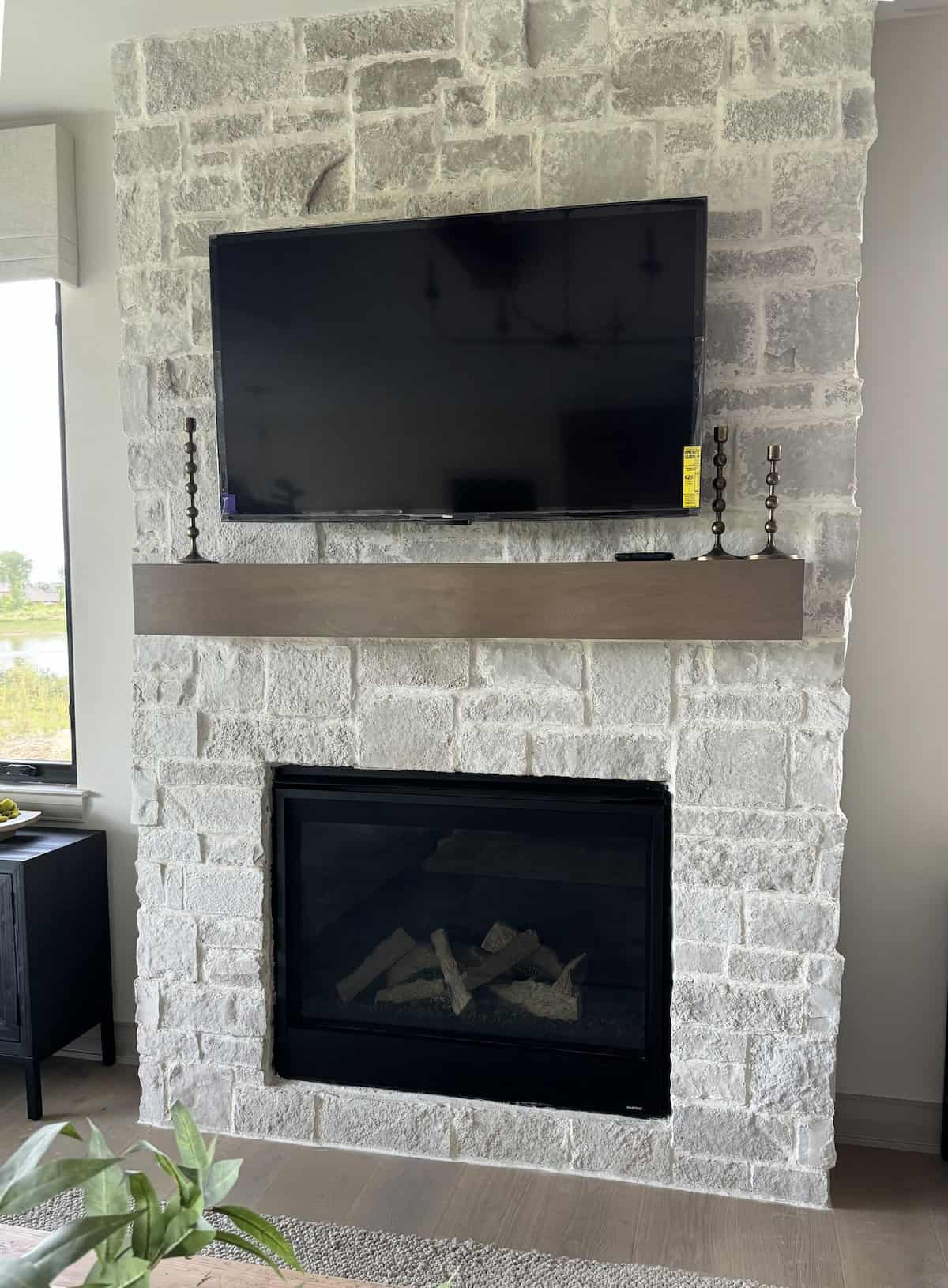
13. Faux Stone Fireplace
Faux stone, also known as manufactured stone veneer, is designed to replicate the appearance of natural stone. It is available in many colors, profiles, and textures.
Because manufactured pieces can be more consistent in size and shape, they may simplify product selection and layout planning. They can also weigh less than some natural stone products.
What Should You Look for in Faux Stone?
Look for faux stone with realistic texture, natural-looking color variation, clear installation requirements, documented testing, an appropriate warranty, and approval for the intended fireplace application.
Evaluate samples in person when possible. Repetition in shapes or coloring may be more apparent across a large fireplace wall than on a small sample board.
Natural Stone Veneer vs. Faux Stone
Natural stone veneer is cut from real quarried material, so each piece has authentic mineral variation. Faux stone is manufactured to resemble stone and generally offers greater consistency.
The better choice depends on the desired appearance, project specifications, budget, product weight, availability, and installation requirements.
Suggested image alt text: Faux stone veneer fireplace surround in a modern living room
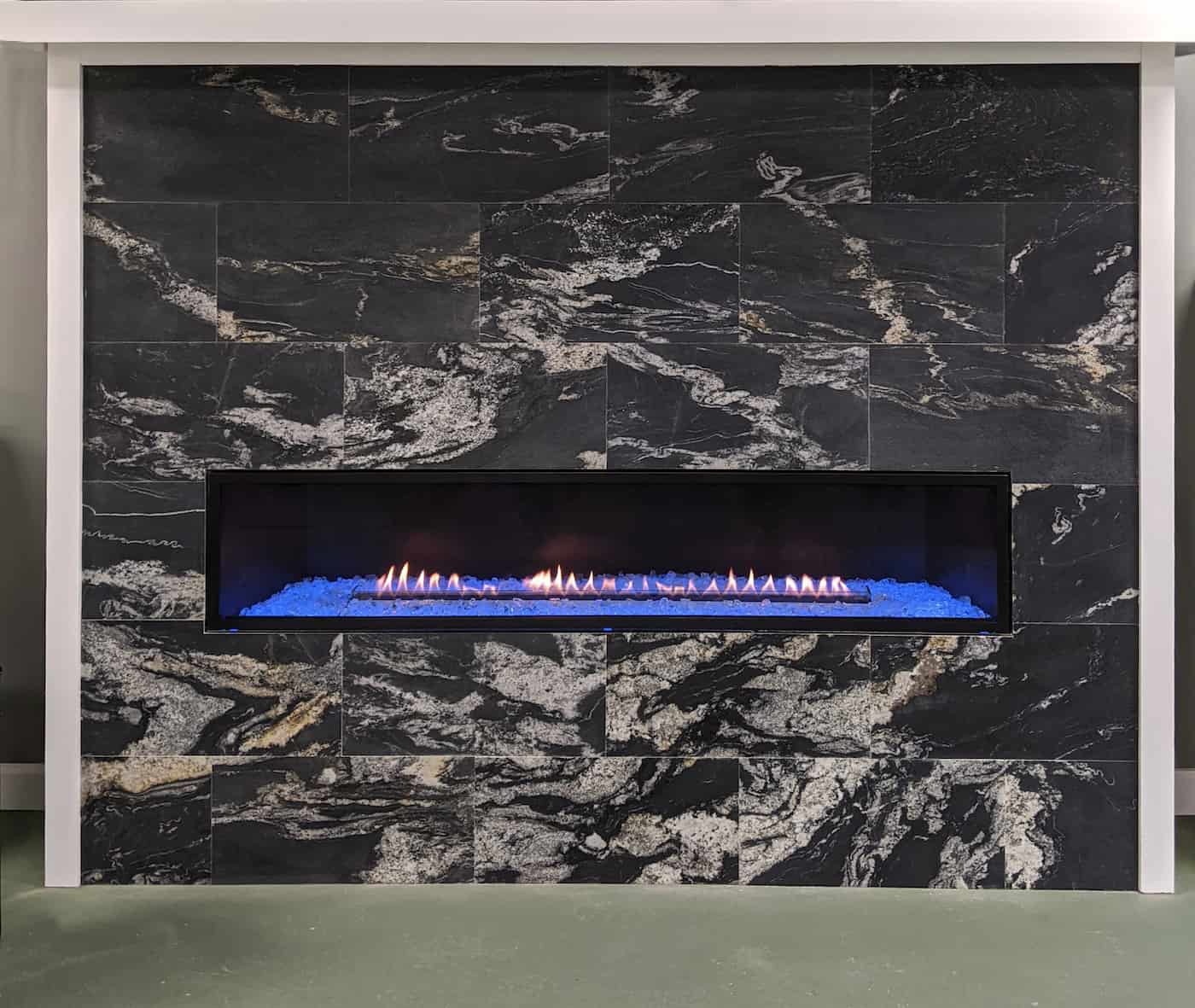
14. Stone Tile Fireplace
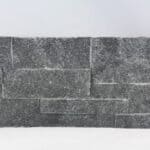
Natural stone tile is an excellent option for homeowners who prefer a smoother surface but still want natural color and movement. It creates a cleaner and more tailored appearance than rugged ledgestone.
Tiles can be installed in several patterns, including:
- Stacked
- Running bond
- Vertical stack
- Herringbone
- Basketweave
- Geometric layouts
Large-format stone tile can make a small fireplace feel less busy. Narrow rectangular tiles can add rhythm and visual movement.
Is Stone Tile Good for a Fireplace Surround?
Stone tile can be a strong fireplace surround choice when the product, substrate, setting materials, and clearances are suitable for the application. It offers natural variation with a smoother, more contemporary finish.
Suggested image alt text: Smooth natural stone tile fireplace with a modern linear firebox
How Do You Choose the Right Stone Veneer for a Fireplace?
Choose a fireplace stone veneer by matching its profile, scale, color, and texture to the room. Then confirm that the selected material and installation system are appropriate for the fireplace.
Match the Profile to the Interior Style
Thin stacked stone can create strong horizontal movement. Irregular fieldstone feels more traditional and organic. Smooth stone tile provides a more refined modern appearance.
A mixed-width profile can bridge the gap between rustic and contemporary styles, making it useful in transitional interiors.
Coordinate the Stone’s Undertones
Look beyond the stone’s main color. Gray stone may contain blue, green, brown, or beige undertones that affect how it coordinates with other finishes.
Compare samples with:
- Flooring
- Wall paint
- Cabinetry
- Mantel wood
- Metal finishes
- Furniture fabrics
- Nearby countertops
Consider the Scale of the Wall
Small, highly textured pieces can add detail to a compact surround. On a very tall or wide wall, a larger or calmer profile may create better visual balance.
The firebox size also matters. A narrow firebox may feel overwhelmed by oversized stone, while tiny pieces can make a large firebox look even larger.
View Samples in the Actual Room
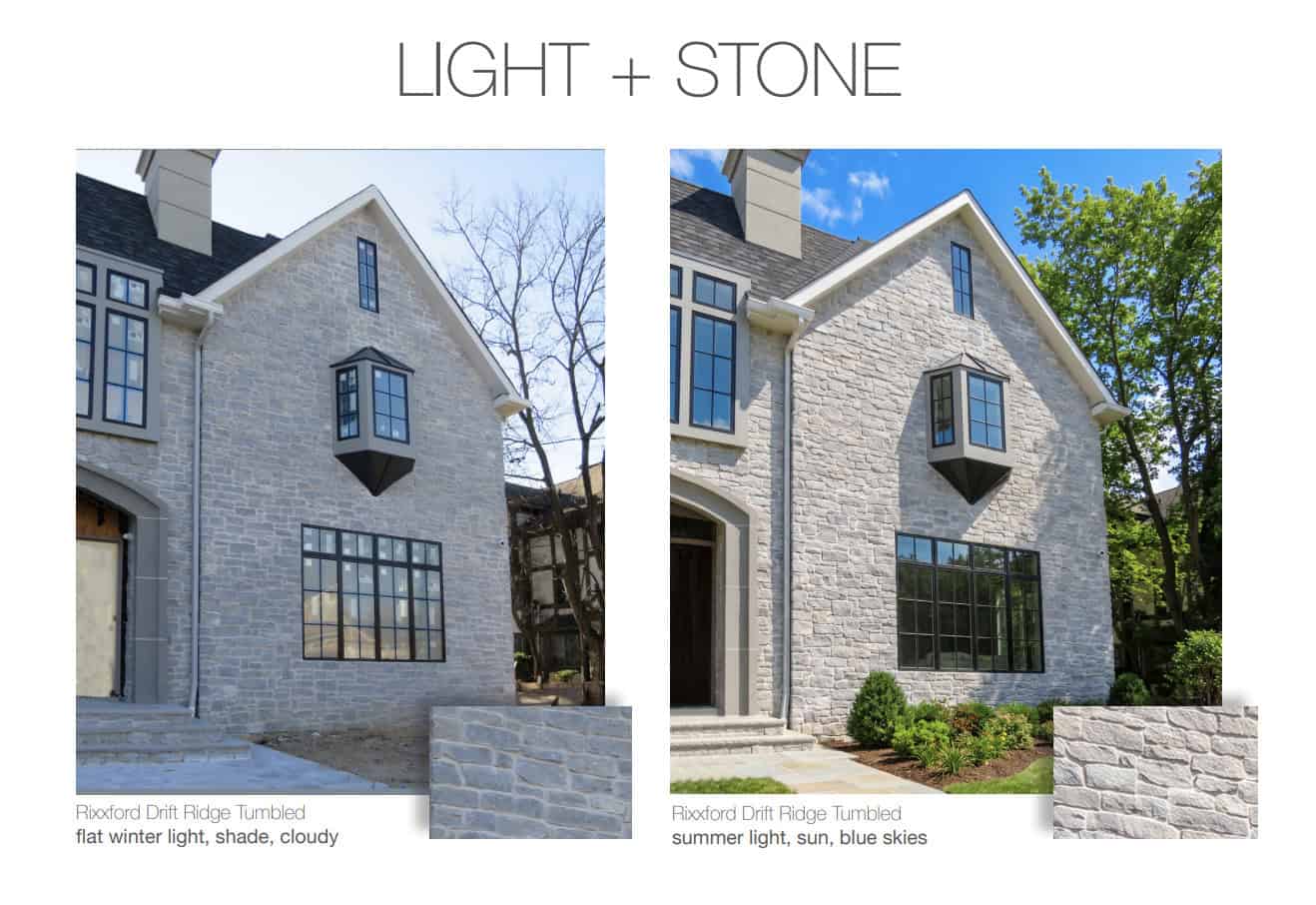
Stone can look different under daylight, recessed lighting, warm lamps, and firelight. View samples at different times of day before making a final decision.
For products with substantial natural variation, review more than one sample. A single piece may not represent the full range of tones in the finished installation.
Plan All Accessories Before Installation
Choose the hearth, mantel, sill, corner pieces, and trim before work begins. Early planning helps avoid awkward transitions and makes it easier to coordinate thicknesses.
Any television mounting, electrical boxes, wiring, or recessed components should also be planned before the wall is covered.
Which Stone Fireplace Style Is Best for Your Home?
The best stone fireplace style is one that complements the architecture without competing with the rest of the room.
Modern Homes
Consider smooth stone tile, narrow stacked profiles, light neutral colors, linear fireboxes, and minimal mantels.
Rustic Homes
Use irregular stone, warm earth tones, deep texture, substantial hearths, and reclaimed wood beams.
Traditional Homes
Arched surrounds, estate-style stone, limestone hearths, and symmetrical built-ins can create a timeless appearance.
Transitional Homes
Choose white, cream, beige, or gray stone with moderate texture. Pair it with a simple wood or stone mantel.
Contemporary Homes
Floor-to-ceiling stone, geometric tile, multi-sided fireboxes, and clean architectural lines work particularly well.
Outdoor Living Spaces
Select exterior-approved materials that complement the home’s façade, landscaping, patio surfaces, and surrounding hardscape.
Frequently Asked Questions About Stone Veneer Fireplaces
Can Stone Veneer Be Installed Around a Fireplace?
Yes, suitable stone veneer can be installed around many fireplaces. The product, substrate, mortar, clearances, and wall assembly must comply with the fireplace manufacturer’s instructions, product requirements, and applicable codes.
Is Natural Stone Veneer Heat Resistant?
Natural stone generally performs well around heat, but the stone is only one part of the fireplace assembly. The backing, mortar, framing, clearances, mantel, and nearby combustible materials must all be appropriate for the application.
Can Stone Veneer Go Over an Existing Brick Fireplace?
Stone veneer may sometimes be installed over an existing brick fireplace when the masonry is sound, clean, stable, and properly prepared. A qualified installer should inspect the surface and determine which preparation and bonding method the project requires.
Can You Put Stone Veneer Over Drywall Around a Fireplace?
The correct substrate depends on the veneer system, fireplace type, location, and manufacturer requirements. Do not assume ordinary drywall is appropriate near every firebox. Verify the required wall assembly before installation.
Can You Mount a TV Above a Stone Fireplace?
A television can often be mounted above a stone fireplace when there is sufficient structural support and the installation complies with heat and clearance requirements. Viewing height, cable access, and future maintenance should also be considered.
What Is the Difference Between Natural and Faux Stone Veneer?
Natural stone veneer is made from quarried stone cut into thinner pieces. Faux stone veneer is manufactured and colored to imitate natural stone. Natural stone offers authentic variation, while faux stone generally provides more consistent shapes and coloring.
Should a Stone Fireplace Go All the Way to the Ceiling?
A stone fireplace should extend to the ceiling when the design needs to emphasize height or create a dramatic architectural wall. A shorter surround may be more proportional in a small room or where the mantel is intended to create a clear stopping point.
What Color Stone Makes a Room Look Brighter?
White, cream, pale beige, and light gray stone can help a room feel brighter and reduce the visual weight of a large fireplace. Stones with subtle tonal variation preserve depth without making the feature feel dark.
What Stone Fireplace Style Looks Most Modern?
Smooth stone tile, long linear profiles, neutral colors, minimal grout lines, geometric patterns, and floor-to-ceiling installations generally create the most modern appearance.
Does a Stone Fireplace Need a Mantel?
A stone fireplace does not always need a mantel. Mantel-free designs can create a clean contemporary look, while wood or stone mantels add definition, display space, and a visual transition across the wall.
How Do You Make a Stone Fireplace Look Less Rustic?
Use lighter stone, smoother textures, straighter layouts, minimal grout joints, a simple mantel, and a modern firebox. Pairing stone with glass, metal, or streamlined cabinetry can also reduce its rustic character.
Can Stone Veneer Be Used on an Outdoor Fireplace?
Yes, when the veneer and installation system are suitable for exterior exposure. Climate, moisture management, drainage, freeze-thaw conditions, and substrate preparation should be considered.
Create a Better Fireplace Surround With Stone Veneer
Few materials can give a fireplace the natural depth and architectural presence of stone. With profiles ranging from rugged ledgestone to smooth tile, stone veneer can complement nearly any interior or exterior style.
A floor-to-ceiling installation can create drama in a vaulted great room. White stone can brighten a modern living area. Reclaimed wood can add warmth, while herringbone tile can introduce a cleaner geometric detail.
The most successful design will consider more than the stone itself. Firebox proportions, wall height, lighting, cabinetry, mantel placement, hearth materials, and nearby finishes all influence the final result.
Explore natural stone veneer, stone tile, hearths, sills, and coordinating accessories to find a combination that complements your home. Order samples before making a final selection, and consult qualified professionals about product suitability, installation specifications, and fireplace clearances.